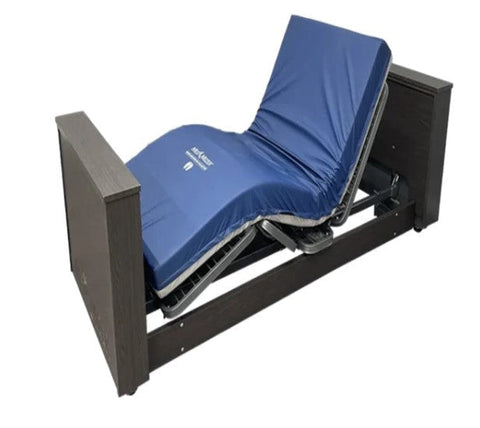
Hospital Bed Dimensions & Sizes: A Simple 2026 Guide

If a hospital discharge or a hard conversation with a doctor has you shopping for an adjustable hospital bed for the first time, this guide walks you through the numbers that matter: standard and bariatric sizes, height range by bed type, mattress fit, and how much doorway and floor space to allocate before you buy.
What are the standard hospital bed dimensions?
In the U.S., standard hospital bedframes are about 35 to 36 inches wide and 80 inches long, excluding bariatric sizes. That is close to a twin XL mattress in length, but narrower in width, designed for one sleeper and easy to reach from both sides. Some brands build 74 inch decks for smaller rooms or shorter users, so check the exact length before assuming every bed matches the standard.
| Bed type | Width | Length | Height range | Notes |
|---|---|---|---|---|
| Standard full electric | 35 to 36 in | 80 in (some 74 in) | 15 to 24 in | One sleeper, twin XL length |
| Hi-low | Twin to king | Up to about 88 in | As low as 3 in, up to 25 in+ | Lowers to reduce fall injury, comes in twin, twin XL, full, queen, king |
| Bariatric | 42 to 54 in | 80 in and up | Varies | Reinforced frame, rated roughly 600 to 1,000 lb |
How much floor space does a hospital bed actually need?
Plan for a few extra inches on each side of the bed. The side rails, headboard, and motor housing at the foot typically add 3 to 5 inches beyond the 36 by 80 inch deck, so the footprint gets closer to 40 by 85 inches once the bed is assembled, and some models pass 90 inches in length.
How tall is a hospital bed, and how far does the height adjust?
Hospital bed height adjusts differently depending on whether the bed is a full electric or a hi-low model designed to reduce injuries from a fall. The type you need usually comes down to how much adjusting a caregiver does by hand.
Full electric and hi-low height range
A standard full electric bed motorizes the height along with the head and foot sections, typically across a 15 to 24 inch range. Hi-low beds extend that range in both directions, with some dropping as low as 3 inches off the floor to reduce injury from a rolling fall, then rising past 25 inches for a caregiver task such as a dressing change.
Citing NIOSH research, OSHA's safe patient handling guidance recommends that caregivers should not manually lift more than 35 pounds of a person's weight without mechanical assistance. That is one reason bed height matters as much as a lift or transfer aid. To protect your back when you need to lift your loved one, raise the deck to your own waist height first.
What size is a bariatric hospital bed?
A bariatric hospital bed is wider than the standard 36 inches, commonly ranging from 42 to 54 inches, and is built with a reinforced frame to carry more weight safely. They are rated to carry anywhere from roughly 600 to 1,000 pounds, though the safe daily working load is generally lower than the maximum capacity. Check both weight and width measurements to decide whether a bed is spacious and sturdy enough for the person using it.
What mattress and sheet size fits a hospital bed?
A 36 by 80 inch hospital bed takes a hospital-specific mattress in that same size and will not fit a standard twin. For these classic hospital beds, bedsheet sets are cut to the narrower 36 inch width and built with deeper pockets, so they stay anchored through repeated head and foot movement where a standard fitted sheet would quickly come loose.
Many hi-low models come in twin, twin XL, full, queen, and king sizes. That means you can keep comfortably sharing a bed with your spouse or loved one without sacrificing their health. Double-check whether the bed you are considering includes a mattress, as some ship with the frame only.
Will a hospital bed fit through your doorways and hallways?
Most interior bedroom doors will clear a hospital bed once it is broken down into its shipped components. Under the ADA Standards for Accessible Design, an accessible doorway provides at least 32 inches of clear opening width. A disassembled hospital bed frame typically measures 33 to 35 inches at its widest section without the head and footboards attached.
Measure the door's actual opening, not its labeled size. Door stops, hinges, and trim commonly take 2 to 4 inches off a door's nominal width, so a "32 inch door" can leave closer to 28 or 30 inches of real clearance. That still works for most disassembled frames, but it is worth confirming before delivery day.
How do you measure your room before you buy?
A few measurements before you order save you a difficult return later.
- Doorway and hallway width, taken at the narrowest point the bed has to pass, including any tight turn from the hallway into the bedroom.
- Space beside the bed, at least 3 feet on the side used for transfers, so a caregiver or lift has room to work.
- Ceiling height, if a ceiling-mounted patient lift is part of the plan alongside the bed.
- Distance to a nearby outlet, since electric beds require power.
Common questions
Is a hospital bed the same size as a twin bed?
Not quite. A standard hospital bed is about 36 inches wide by 80 inches long. That matches a twin XL in length but is narrower than a standard twin, and it needs a hospital-specific mattress rather than a regular twin mattress.
Will a hospital bed fit through a standard doorway?
In most homes, yes. Once the head and footboards are off, the frame is usually 33 to 35 inches at its widest, and an accessible doorway gives at least 32 inches of clear opening. Measure the real opening first, since trim and stops can take a few inches off the labeled width.
How wide is a bariatric hospital bed?
Bariatric beds commonly run 42 to 54 inches wide with a reinforced frame, rated to hold roughly 600 to 1,000 pounds. Check both the width and the weight rating against the person who will use the bed.
Needs often change over time, so it is worth choosing a bed that fits the room and the person not just today but also six months from now. If you have measured your space and still are not sure which size or height range fits, our team can walk through the numbers with you before you order.